
Introduction: The Majestic Titans of Ngorongoro
The Ngorongoro Conservation Area is home to some of Africa’s most awe-inspiring wildlife, but among the many creatures that roam its expansive landscapes, elephants stand out as true giants of the land. These intelligent, emotional, and resilient animals have thrived in the region for centuries, shaping the environment and captivating the hearts of those lucky enough to witness them in the wild. However, their presence in Ngorongoro is unique, as they navigate the challenges of the crater’s terrain, interact with other species, and play a crucial role in maintaining ecological balance.
This article takes a deep dive into the hidden world of Ngorongoro’s elephants, exploring their migration patterns, social structures, diet, conservation challenges, and the best ways to observe them on safari.

The Unique Elephant Population of Ngorongoro
Unlike the massive elephant herds found in other parts of Tanzania, the elephants of Ngorongoro tend to live in smaller, more isolated groups. The crater itself is not an ideal habitat for large breeding herds due to limited resources and space, but it serves as a sanctuary for old bulls and smaller family groups.
1. The Old Bulls of Ngorongoro
- Many of the elephants seen in the crater are older bulls that have moved away from larger herds.
- These mature males have some of the largest tusks in Africa, a result of their longevity and genetic strength.
- They often roam alone or in small groups, creating a majestic presence in the open grasslands.
2. Elephant Families in the Highlands
- While breeding herds are rare in the crater itself, they are more commonly found in the surrounding forests and highlands.
- These herds consist of closely bonded females and their young, led by a matriarch who guides them to food and water sources.
Migration Patterns and Seasonal Movements
Elephants are highly intelligent and resourceful when it comes to finding food and water. The elephants of Ngorongoro follow ancient migration routes that take them in and out of the conservation area, depending on seasonal changes.
1. The Dry Season Challenge
- During the dry season, elephants move out of the crater to search for water, often traveling toward Lake Manyara or the Serengeti.
- The dense forests of the crater rim provide essential food sources such as bark, roots, and leaves.
2. The Wet Season Abundance
- The rainy season brings an explosion of vegetation in the crater, attracting elephants back to enjoy the lush grasses.
- Waterholes fill up, making it easier for them to stay within the crater’s boundaries for longer periods.
The Elephants’ Role in Shaping the Ecosystem
Elephants are often referred to as “ecosystem engineers” due to their ability to modify landscapes in ways that benefit other species.
1. Creating Watering Holes
- Elephants dig into dry riverbeds with their trunks and tusks, creating water sources that other animals rely on.
2. Controlling Vegetation Growth
- By uprooting trees and stripping bark, elephants help maintain the balance between grasslands and woodlands.
- Their feeding habits prevent forests from taking over the open plains, which is essential for grazers like wildebeest and zebras.
3. Spreading Seeds
- Elephants consume a wide variety of plants, dispersing seeds through their dung as they move, promoting plant diversity and forest regeneration.
Challenges Facing Ngorongoro’s Elephants
Despite their size and strength, elephants face significant threats that endanger their future in Ngorongoro.
1. Human-Wildlife Conflict
- As human settlements expand, elephants sometimes raid crops, leading to conflicts with farmers.
- Efforts are being made to use non-lethal deterrents such as beehive fences to keep elephants away from farmland.
2. Poaching and the Ivory Trade
- Although Tanzania has taken strong anti-poaching measures, elephants remain vulnerable to illegal hunting for their tusks.
- Conservation organizations work tirelessly to protect these magnificent creatures through anti-poaching patrols and awareness campaigns.
3. Climate Change and Habitat Degradation
- Rising temperatures and unpredictable rainfall patterns impact water availability, forcing elephants to travel further in search of resources.
- Habitat destruction from deforestation also limits their access to key feeding areas.
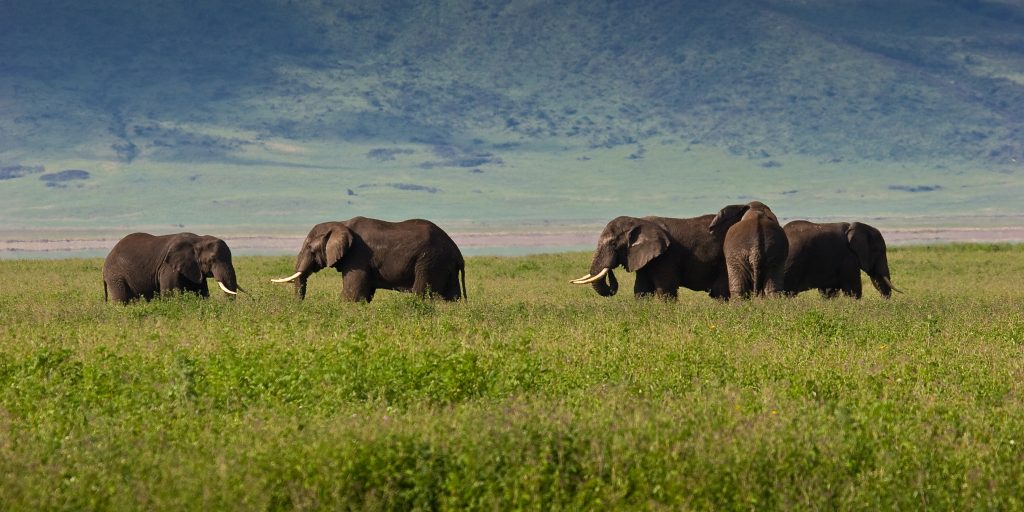
Best Places to See Elephants in Ngorongoro
For those hoping to witness these majestic creatures in the wild, here are some of the best locations in Ngorongoro:
1. The Crater Floor
- Old bull elephants are commonly spotted grazing near the Lerai Forest or around the permanent swamps.
- They are often seen walking alone, providing incredible photography opportunities.
2. The Lerai Forest
- This lush area on the crater floor is one of the best places to see elephants feeding on acacia trees.
- The forest provides cover and rich food sources, making it a preferred spot for smaller groups.
3. The Highlands and Forests Beyond the Crater
- For a chance to see larger elephant herds, explore the forests surrounding the Ngorongoro Highlands.
- These areas offer a more secluded and less crowded safari experience.
Conclusion: The Gentle Giants of Ngorongoro
Elephants are not just a highlight of Ngorongoro safaris; they are a vital part of the ecosystem and a symbol of Africa’s wild beauty. Observing these gentle giants in their natural habitat is a humbling experience, offering insight into their intelligence, resilience, and crucial role in nature. By supporting conservation efforts and responsible tourism, we can ensure that future generations continue to witness the magic of Ngorongoro’s elephants.