Introduction: A Kingdom Like No Other
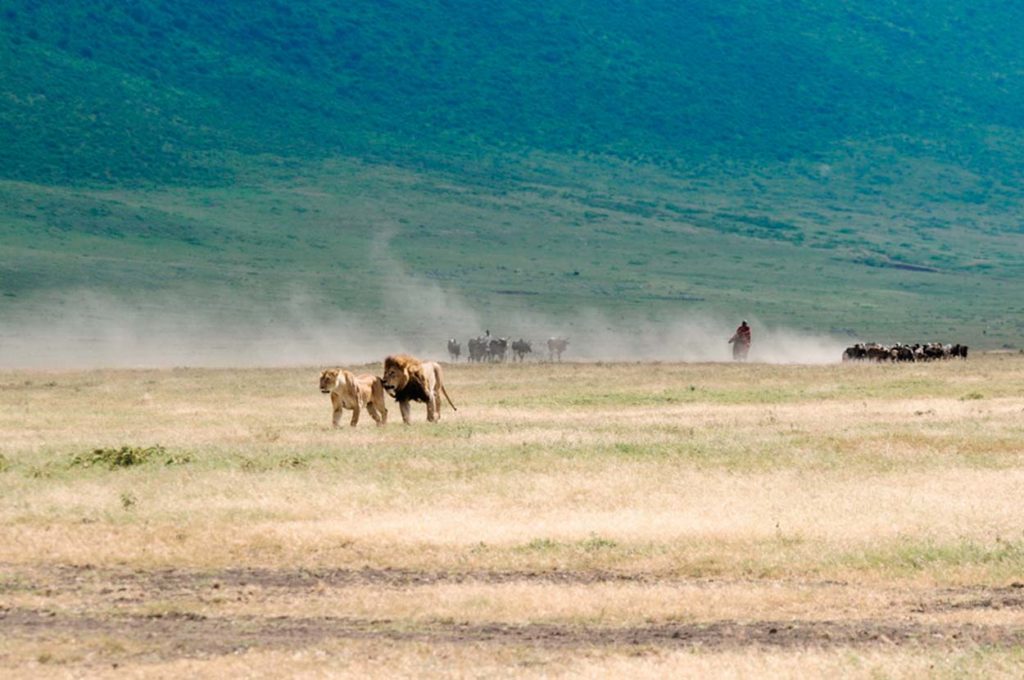
Ngorongoro Crater, a natural marvel formed from the remnants of an ancient volcano, is home to one of the densest populations of lions in Africa. While visitors marvel at their raw power and regal presence, few realize that these lions live under conditions vastly different from their Serengeti counterparts. The crater’s natural walls form an enclosed ecosystem, creating an almost island-like environment where the lions have evolved in isolation. This has led to fascinating, and sometimes troubling, effects on their behavior, social structures, and genetic diversity.

The Unique Environment of Ngorongoro Crater
The lions of Ngorongoro inhabit a setting unlike any other big cat population. The Crater itself, spanning about 260 square kilometers, acts as a self-contained world, limiting the movement of its residents. Unlike the Serengeti lions, who have the freedom to roam vast landscapes, Ngorongoro’s lions are largely confined to this natural amphitheater, resulting in distinct behavioral and genetic traits.
Abundant Prey, Limited Competition
Ngorongoro’s lush grasslands and permanent water sources attract a year-round abundance of herbivores, including zebras, wildebeests, buffalo, and gazelles. This means the crater lions do not need to follow prey across vast distances, as Serengeti lions do during the Great Migration. The steady food supply has shaped their hunting habits, making them more opportunistic and sometimes even lethargic, as they do not need to exert themselves as much to secure a meal.
Additionally, unlike other lion populations that face threats from hyenas or competing lion prides, Ngorongoro’s isolated nature minimizes external competition, allowing for unusually high pride densities. This results in frequent territorial disputes and shifts in pride dynamics.
Social Structures and Unconventional Pride Dynamics
Typically, lion prides consist of related females, their offspring, and a coalition of dominant males who control the pride for a few years before being ousted. However, in Ngorongoro, the confinement of the crater has led to some peculiar adaptations in lion society.
Frequent Inbreeding and Its Consequences
Because of the crater’s enclosed nature, new bloodlines rarely enter the population. This has led to inbreeding among pride members, resulting in genetic weaknesses. Studies show that Ngorongoro’s lions have lower genetic diversity than their Serengeti cousins, leading to increased susceptibility to disease, physical deformities, and reduced fertility rates.
A tragic example occurred in the 1960s when an outbreak of biting flies devastated the crater’s lion population. The surviving few were forced to repopulate through inbreeding, further narrowing their gene pool. Even today, the legacy of this event lingers, affecting the health of the lions.
Territorial Clashes and Power Struggles
Due to the crater’s limited space and high lion density, prides engage in more frequent and intense battles for territory. Unlike in the Serengeti, where defeated males can disperse and attempt to take over a new pride elsewhere, Ngorongoro’s males have few escape options. This leads to brutal confrontations, with some coalitions ruling for extended periods, sometimes up to six years, as there are limited external challengers.
Females, on the other hand, show unusual flexibility in their pride memberships. Unlike in open landscapes where females remain in their natal prides for life, Ngorongoro lionesses may sometimes switch prides to avoid inbreeding or align with stronger groups.
Hunting Techniques: Opportunistic and Efficient
Ngorongoro lions do not have to chase herds across vast plains, so their hunting strategies differ from those of Serengeti lions. They often use ambush techniques, leveraging the crater’s natural terrain to trap prey against the slopes. Some prides specialize in taking down buffalo, a dangerous but rewarding strategy given the consistent availability of these massive herbivores.
Interestingly, crater lions also show a higher degree of scavenging than other lion populations. Given their competitive pride structures, weaker or lone lions sometimes rely on stealing kills from hyenas and leopards rather than hunting independently.
Unusual Interactions with Other Predators
Lions and hyenas are known for their fierce rivalry, but in Ngorongoro, the dynamic is even more intense. With both predators confined within the crater, skirmishes over kills are frequent and brutal.
Unlike in open plains where hyenas can flee, the crater’s geography forces confrontations. Lion prides will often actively seek out hyena dens to eliminate competition, resulting in higher hyena mortality rates. On the other hand, hyenas, known for their cunning, sometimes gang up in large numbers to steal carcasses from even the most dominant lions.
The Future of Ngorongoro’s Lions: Conservation Challenges
The isolation that makes Ngorongoro’s lions so unique also makes them vulnerable. Conservationists have raised concerns about their declining genetic diversity and the increasing risks posed by disease outbreaks, climate change, and habitat changes.
Proposed Solutions to Genetic Decline
Efforts are underway to explore ways of introducing new genetic material into the population. Conservationists have debated translocating lions from other areas to increase genetic diversity, but such efforts pose ethical and logistical challenges. Would these introduced lions adapt to the crater’s environment? Would they disrupt existing prides? These are ongoing questions in wildlife management.
Human-Wildlife Conflict
Although Ngorongoro is a protected area, its proximity to Maasai communities means that human-wildlife interactions still occur. Occasionally, lions venture out of the crater, leading to conflicts with herders who must protect their livestock. Conservation programs aimed at fostering coexistence, such as compensation schemes for lost cattle and the use of lion-proof bomas (enclosures), are critical to maintaining harmony between people and wildlife.
Conclusion: The Unmatched Majesty of Ngorongoro’s Lions
Ngorongoro’s lions are a fascinating case study of how isolation shapes wildlife behavior. They have adapted to a life of limited space, abundant prey, and intense pride rivalries, making them one of the most unique lion populations in Africa. However, their genetic challenges and conservation threats remind us that even the most dominant predators need protection.
For visitors, witnessing these lions in their crater kingdom is an experience like no other. As they lounge in the sun, stalk prey in the tall grass, or engage in fierce battles for dominance, they tell a story of survival in one of nature’s most remarkable settings.
Have you encountered Ngorongoro’s lions on a safari? Share your experience in the comments below! 🦁✨